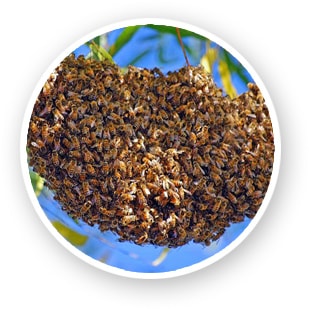
We Love Bees

At JG, we love bees. Although they are not a protected species in the UK, we do everything we can to remove bees without harming them - this goes for bumble bees too. However, if bees, bumble or honey, are in an inaccessible area or pose an immediate health and safety risk, they may need to be destroyed.

It is often stated that bees are a protected species, however this is not true. Although not protected, we consider the many benefits they have on our eco system and JG will always attempt to rehome swarms and remove nests without harming the insects.

JG Pest Control provides a same-day response and emergency bee nest removal in evenings and weekends across many parts of the UK - including Bedfordshire - leaving you free of bees and the inconvenience they bring.
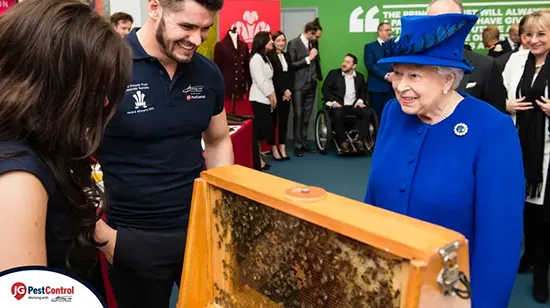
A honey bee queen surrounded by her colony

Our Site Survey Promises

  • Identify what access may be needed
  • Significantly reduce the likelihood of people getting stung during removal
  • Guarantee no other bees return after extraction
  • Provide expert advice on removal and prevention
  • Carry out the work effectively and rapidly in one day
  • Send you a fixed and detailed quotation

Initial Visit - Four Stages

  • On Arrival: locate the nest, check for additional colonies
  • Risk Assessment: identify risks the nest may cause if disturbed
  • Relocation: assess whether the nest can be moved without destruction
  • Eradication: if relocation is not possible, apply an insecticidal treatment

Treatment Process

Depending on the outcome of the survey, and your acceptance of our quote, we will either relocate or eradicate the nest. Below is a basic outline of the principles of the treatment. Every removal is different, so your specific quote will contain job-specific details.

Relocating Bumble Bees

Whilst wearing relevant PPE, we will expose the nest, either with hands or tools, and gently lift the nest (with the queen) away from the nesting site.

The nest is then placed into a suitable container. On removal, we allow the bees time to settle, secure the container, remove from site and rehome at a suitable location.

A bumble bee nest being carefully exposed for relocation

Relocating Honey Bees

For honey bees, we wear relevant PPE and expose the nest location, either with hands or tools, then gently lift the nest (with the queen) away from the nesting site.

We use a suitable container - usually larger than for bumble bees. If the bees have settled on a branch or fixed structure that can be reached safely, we place the container under the swarm slowly, lifting to cover the bees or cut bees from the structure, then secure the container.

Wherever possible we relocate the bees to a willing bee sanctuary, or failing that, to a wooded area at least 1-2 miles from the collection site (which prevents them from returning). The few remaining bees will move on and join a new colony.

A honey bee colony being prepared for relocation

Last Resort

If bees cannot be relocated - because they are inaccessible or pose an immediate health and safety risk - they can be treated using a chemical dust. The entrance holes must be blocked off a few days later to prevent the risk of contaminating other swarms or hives.

If you have any additional questions or concerns, please feel free to call our customer services team.

Signs You Have a Bee Problem

Visible ActivityLarge numbers of bees coming and going from a single point on your building
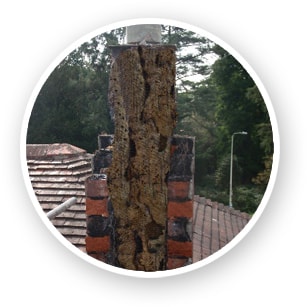
Buzzing in WallsAudible buzzing inside cavity walls, chimneys or ceiling voids
Wax or HoneyHoney or wax seepage through walls or ceilings is a strong indicator of a honey bee colony
SwarmsA swarm settling on a branch, fence or wall - usually temporary while scouts find a new home
Bumble NestsSmall nests in compost heaps, garden sheds or bird boxes
Returning BeesBees returning to the same spot day after day - a sign the colony is established

Find Out More